

This trip was originally planned as a 3-day birding trip, from 2–4 January 2026, but it ultimately became a 2-day trip, from 2–3 January 2026.
Day 1
We departed from Dar with a 6 am flight via Zanzibar for a drop-off and pick-up.
We arrived in Pemba around 7:45, where our guide and driver were waiting to pick us up and take us to Ngezi Forest for registration.
Before arriving at the Ngezi Forest office, we picked up a few species and stopped along the way, like the Western Cattle Egret, Black-headed Heron, Black Kite (Yellow-billed), Crowned Hornbill, and Java and House Sparrows.
After we arrived at the forest, we picked up African Goshawk (Pemba endemic race), Broad-billed Roller Dickinson's Kestrel, Black-bellied Starling (Pemba endemic race), and Olive Sunbird (Pemba endemic race), and later a glimpse of our 1st target, Pemba Green Pigeon, flying and calling. The Pemba Green Pigeon may be challenging to locate for some days; that is why it’s a first target to prioritize.
Around 12:40 PM we headed to the other part of the forest to see an endemic mammal, the Pemba flying fox, on our way to the fruit bat site. We registered the Blue-cheeked bee-eater, our second target, the Pemba Sunbird (which we only heard), and the Black-winged Red Bishop. And then later we saw the fruit bats and went to rest because the sun was already harsh and there were fewer activities.
Around 4, we were already resuming birding activities. After we arrived at the drop-off spot, we managed to get a clear view of Pemba Sunbird and Pemba White-eye, and after a few minutes walking in the forest, we managed to get excellent views of Pemba Green Pigeon, with a photo too. By 4:30 PM, we had already observed 3 targets.
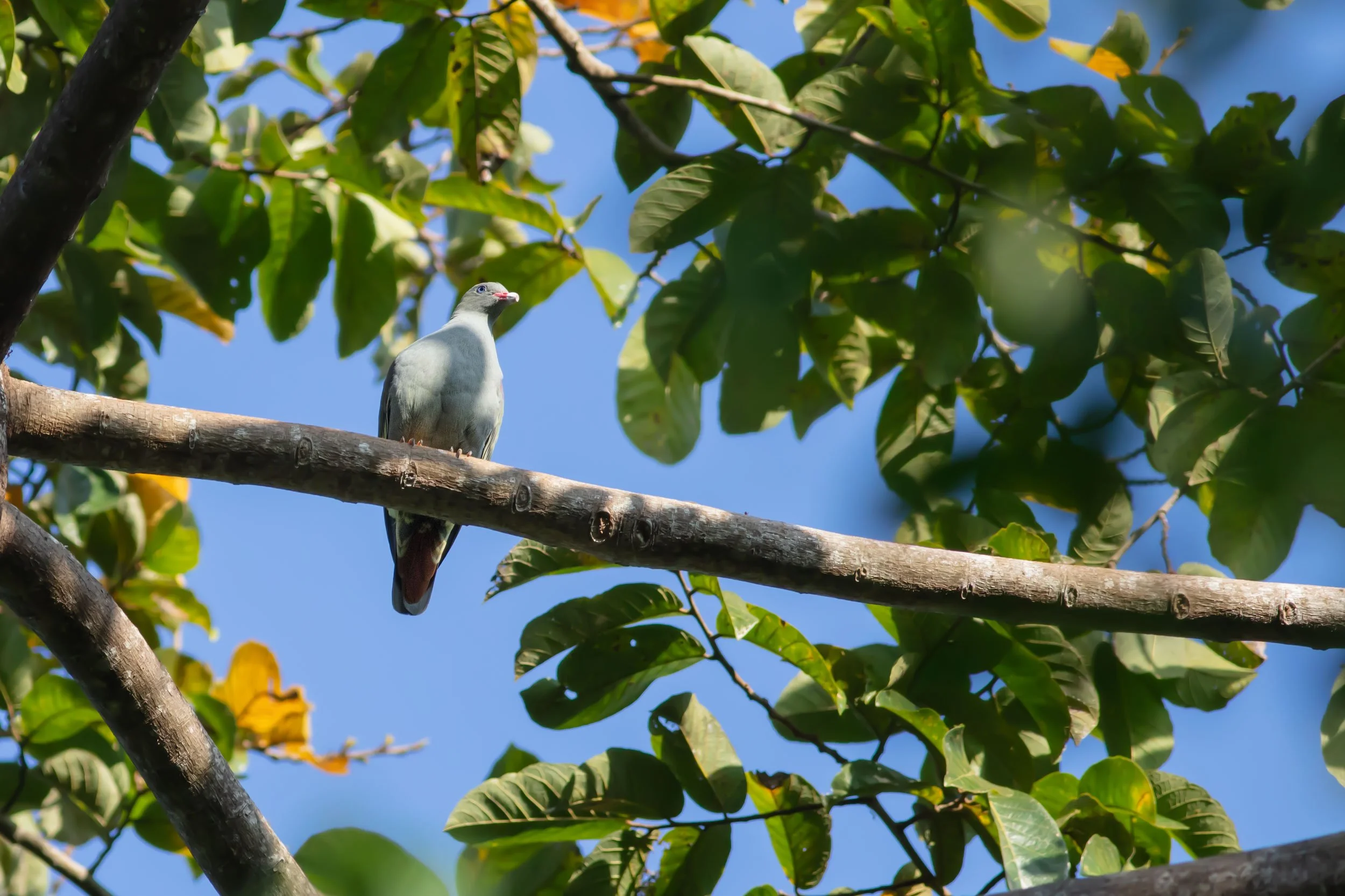
Pemba Green Pigeon
By 5 PM we headed to Makangale Wetland, part of the forest, to be close to the Pemba Scops Owl site. On the wetland we picked up Black-winged Stilt, Common Ringed Plover, Wood Sandpiper, Common Greenshank, Little Stint, Black Heron, Little Egret, Little Egret (Dimorphic), Little Heron, Great Egret, Grey Heron, Purple Heron, Palm-nut Vulture, Black Sparrowhawk, Wire-tailed Swallow, and Pemba White-eye, which was very close to me, and I managed to get a clean shot this time.
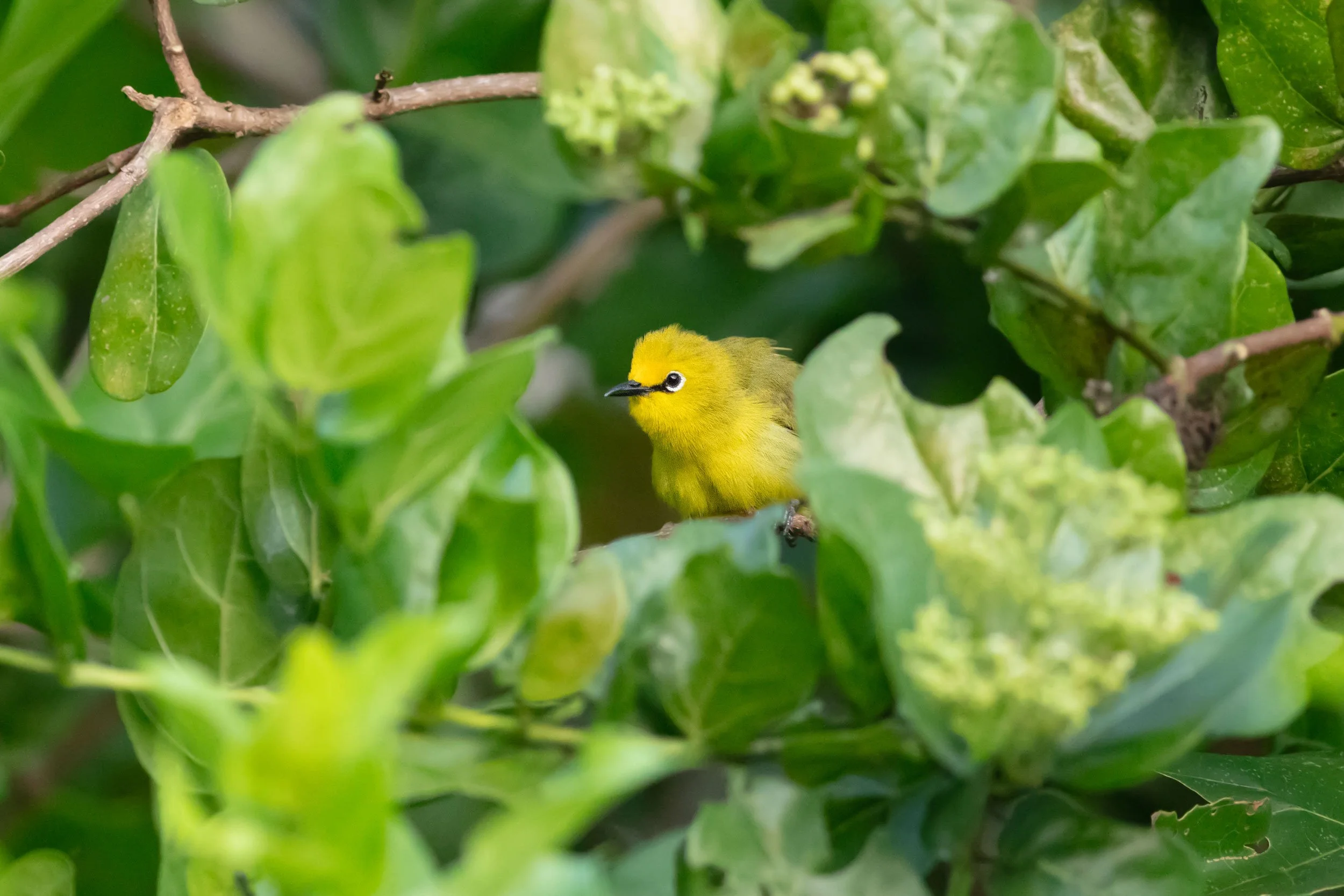
Pemba White-eye
Around 6 PM we went in the forest and waited for the time for their calls. Right after nautical twilight, we began to hear the calls coming from a location very close to us. We heard 4; 2 pairs were close to us, and the other 2 were on the other side. We observed them for a few minutes, then returned to our accommodation and celebrated with a glass of locally made sugarcane juice with lemon squeezed in. Along the way back in the forest, we spotted the African Pygmy Kingfisher roosting. Our guide said that this location is always the roosting spot for the kingfisher.
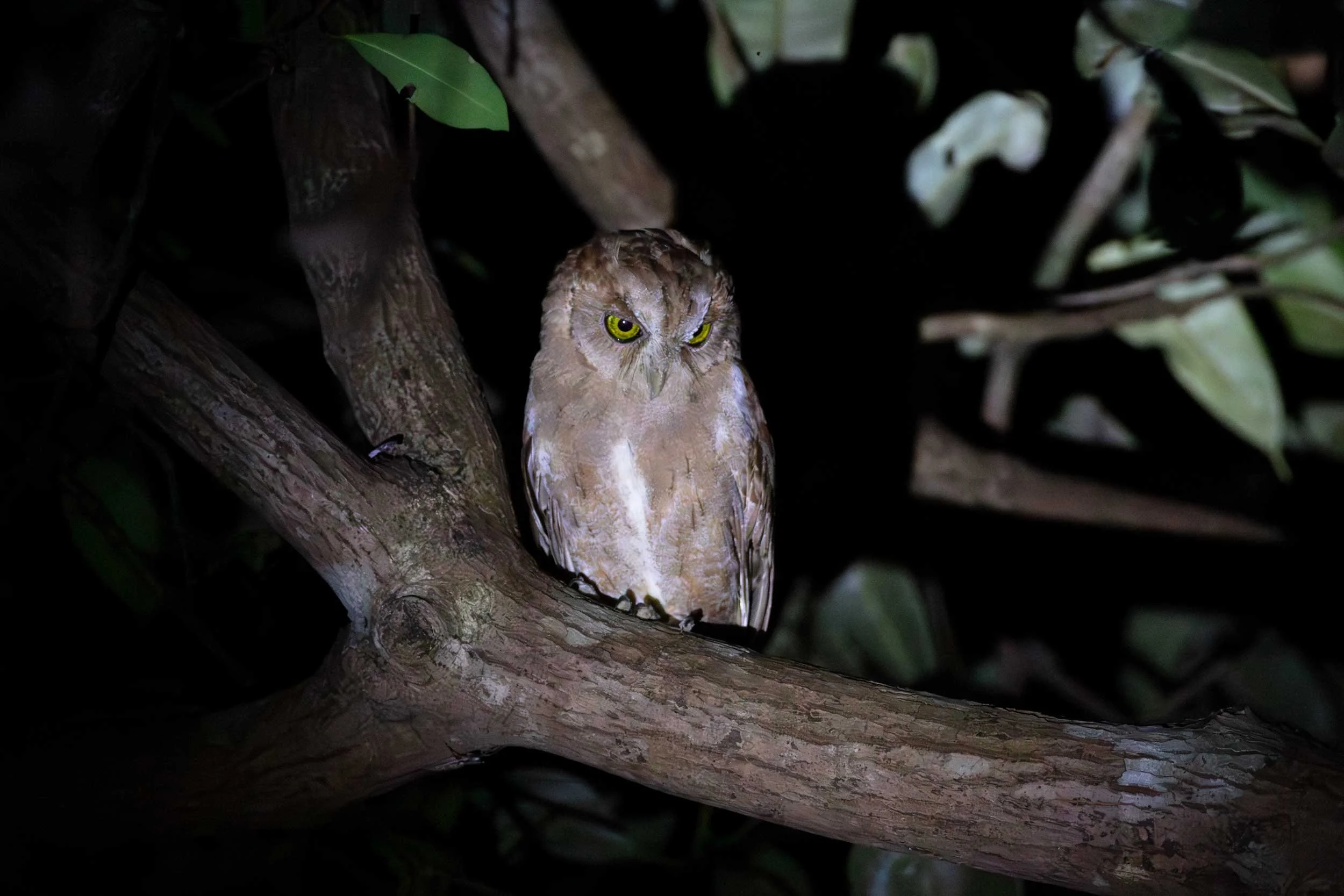
Pemba Scops Owl
After we checked all our targets for the day. We planned the next day to explore birds around the ocean and get clean shots of the Pemba Sunbird.
Day 2
I had to shorten my trip because I had an emergency meetup the next morning, and my flight would arrive late on day 3, so I needed to change my plans. We make calls and arrange flight and ferry, which was a priority, and I managed to book a flight with Auric Air from Pemba to Unguja-Zanzibar, then the Zanzibar Ferry to Dar.
After sorting cab and flight logistics, I need to be at the airport around 11 am.
We did a light birding session in Makangale area, in which we managed to register the Emerald-spotted Wood Dove, White-browed Coucal, Mangrove Kingfisher, Brown-headed Parrot, African Paradise Flycatcher, and Bronze Mannikin.
While at the airport waiting for my flight, we saw a Pemba Sunbird perched nicely, but our camera was already on the bag, and we heard a call of Zitting Cisticola.
Our take!
It is possible to see all four Pemba bird endemics in one day. However, you should be open-minded and understand that there is always a chance you may not see all four. That is why we always recommend a 3-day birding tour extension, which realistically maximizes your chances of finding all the target species.
If you are fortunate enough to find all four target species on the first day, you can then enjoy a more relaxed birding pace on the following days, exploring the island’s shorebirds and other birdlife while also allowing time to rest and enjoy Pemba.
42 species recorded on this trip
eBird trip report: https://ebird.org/tripreport/462536
YouTube video: https://youtu.be/Mz4y6PcGeQY
